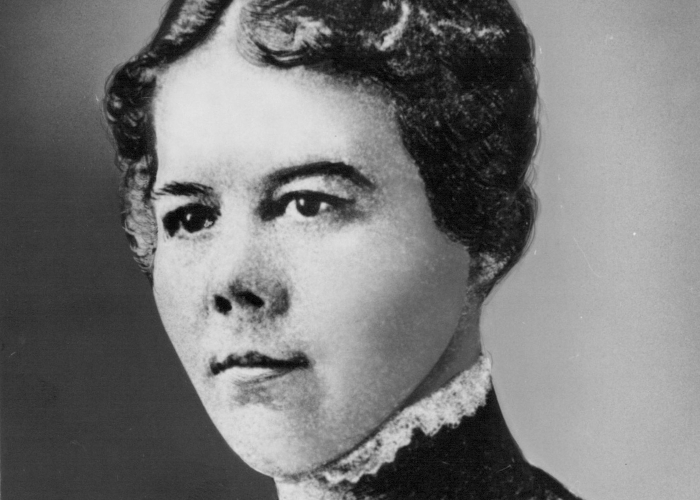
Historian Tai S. Edwards and Judith Manthe, chief emeritus of Wyandot Nation of Kansas, discuss the new book Lyda Conley and the Fight to Preserve Huron Indian Cemetery. Edwards and two other scholars drew from oral histories (including Manthe’s), newspaper reports, and court documents to chronicle the efforts and resilience of the Conley sisters to protect ancestral burial grounds.
For decades, Eliza (Lyda) Conley and her two older sisters, Helena and Ida, protected Huron Indian Cemetery in Kansas City, Kansas — now known as the Wyandot National Burying Ground — from developers, after Congress authorized its sale in 1906.
In the fight to block the sale, Conley became the first Indigenous woman to argue a case before the U.S. Supreme Court, where she established legal precedents that protect Indigenous sovereignty today. Edwards discusses the case and how, while battling in court, the three sisters built a shack in the cemetery, known as “Fort Conley,” providing round-the-clock surveillance and cemetery maintenance for years. Their descendants continued to watch over the cemetery into the 21st century.
Edwards is a professor of history at Johnson County Community College and director of the Kansas Studies Center. She also co-edited another book this year, Shokhí: A Kanza Relative, a Monument, and Rematriation, about the return of a grandfather rock to Kaw Nation.
Manthe is the former chief of the Wyandot Nation of Kansas and has spent years sharing Wyandot history with community groups and in schools. She is co-leader of the Trespassers Beware: Fort Conley and Wyandot Women Warriors art installation (with Monumenta, also part of the KC Monuments Coalition) and co-producer of KCPT’s recent documentary Lyda: Wyandot Warrior.