Instituições de todo o país estão a comemorar o 250.º aniversário dos Estados Unidos em 2026 e, nesta primavera, alguns dos documentos históricos mais importantes do país estão em exposição num dos principais museus da região de Kansas City.
Em parceria com America250, a Biblioteca e Museu Presidencial Harry S. Truman traz quase duas dezenas de artefactos de importância crucial para a história americana a Independence com a exposição «Opening the Vault: The Story of US». Muitos dos documentos nunca tinham sido exibidos fora dos Arquivos Nacionais.
Além disso, muitas peças têm ligações diretas com a região de Kansas City e com as decisões do Presidente Truman durante o seu mandato, desde o Compromisso do Missouri e a decisão no caso Brown v. Board of Education (originada na vizinha Topeka) até ao Decreto Presidencial n.º 9981, que pôs fim à segregação nas Forças Armadas dos EUA.
Aberta até 24 de maio, a Biblioteca Truman disponibiliza para consulta os seguintes documentos de grande valor:
- Desenho original do Grande Selo dos Estados Unidos, 1782: O desenho continua a ser utilizado após mais de dois séculos.
- Tratado de Paris, 1783: O acordo pôs fim à Guerra da Independência e reconheceu a independência dos Estados Unidos.
- Declaração de Direitos (Revisões do Senado), 1789: As primeiras alterações do Senado constam neste documento, que define as liberdades fundamentais dos Estados Unidos.
- Aquisição da Louisiana, 1803: Esta aquisição duplicou a área dos Estados Unidos.
- Compromisso do Missouri, 1820: As tensões entre os estados livres e os estados escravistas foram resolvidas através dos termos estabelecidos pelo Compromisso do Missouri.
- Compromisso de 1850: Foi lançada mais uma iniciativa para atenuar as tensões entre os estados livres e os estados escravistas, à medida que se conquistavam novos territórios após a Guerra Mexicano-Americana.
- Lei do Kansas-Nebraska, de 1854: Ao revogar efetivamente o Compromisso do Missouri, a Lei do Kansas-Nebraska deu origem a conflitos conhecidos como «Bleeding Kansas» — um precursor da Guerra Civil.
- Dred Scott contra Sandford, 1857: esta decisão do Supremo Tribunal negou a cidadania aos afro-americanos.
- Telegrama anunciando a rendição do Forte Sumter, 1861: Com a rendição do Forte Sumter pelo Exército dos EUA às forças confederadas, teve início a Guerra Civil Americana.
- Resolução Conjunta que propõe a Décima Terceira Emenda, 1865: Ratificada em dezembro de 1865, a resolução propunha a abolição da escravatura nos Estados Unidos.
- Acórdão no processo Plessy contra Ferguson, 1896: nesta decisão do Supremo Tribunal, a segregação foi considerada constitucional, estabelecendo a doutrina «separados, mas iguais».
- Discurso dos 14 Pontos do Presidente Woodrow Wilson, 1918: O discurso proferido perante o Congresso apresentou um plano para a paz após a Primeira Guerra Mundial.
- Caderno do Projeto Manhattan, 1942: Notas manuscritas descrevem em pormenor o projeto que levou à criação da bomba atómica.
- Rendição da Alemanha, 1945: Com este documento, a Segunda Guerra Mundial chegou ao fim na Europa.
- Decreto Presidencial n.º 9981, de 1945: O presidente Harry S. Truman assinou este decreto para acabar com a segregação nas Forças Armadas dos EUA.
- Tratado do Atlântico Norte, 1949: A Organização do Tratado do Atlântico Norte foi fundada no rescaldo da Segunda Guerra Mundial, redefinindo a segurança global.
- Acordo de Armistício para a Restauração do Estado da Coreia do Sul, 1953: As hostilidades cessaram e foi criada a Zona Desmilitarizada da Coreia.
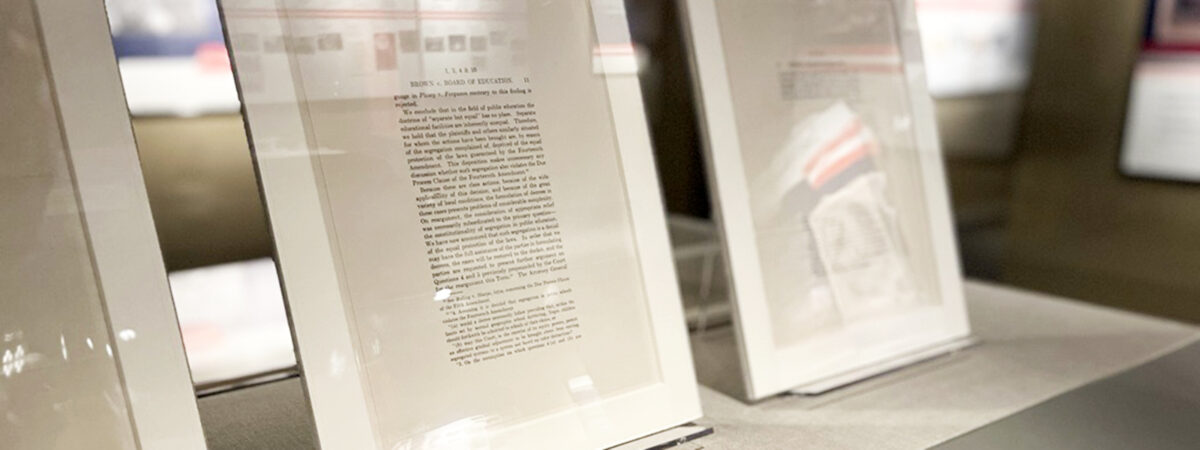
- Brown v. Board of Education, 1954: Com origem na vizinha Topeka, esta decisão histórica do Supremo Tribunal revogou a anterior orientação de «separados, mas iguais».
- Decreto Presidencial n.º 10730: Desegregação da Central High School, 1957: O presidente Dwight D. Eisenhower enviou tropas para fazer cumprir a desegregação numa escola secundária de Little Rock.
- Lei dos Direitos de Voto de 1965: O direito de voto foi consagrado nesta lei fundamental, que eliminou os obstáculos à democracia.
- Resolução Conjunta que propõe a Vigésima Sexta Emenda, 1971: Na sequência do ativismo juvenil durante a época da Guerra do Vietname, a idade mínima para votar foi reduzida para os 18 anos.
Depois de ter tido a oportunidade de ver estes documentos raros em exposição, poderá aprofundar o seu conhecimento sobre os acontecimentos que os originaram e descobrir ligações locais em toda a região.
Continue a ler para descobrir formas de explorar a história, desde a Biblioteca Truman até às instituições da região de Kansas City.
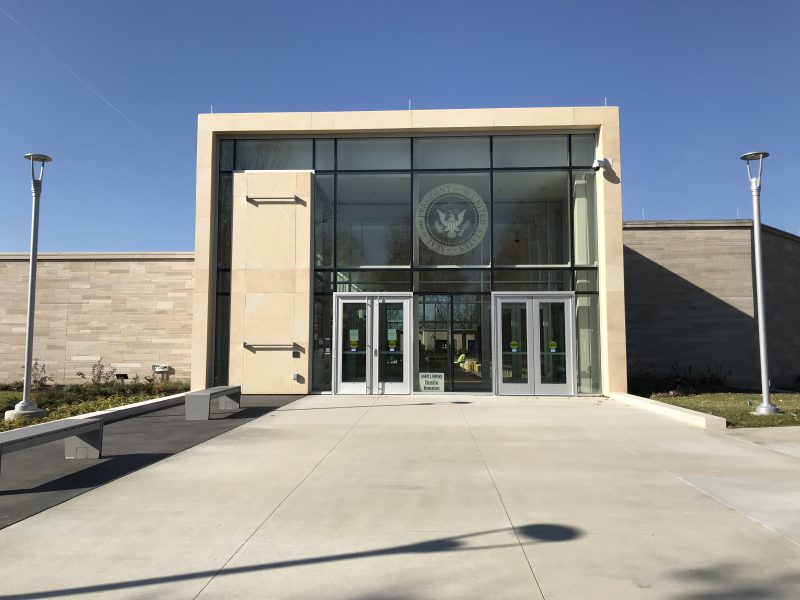
Biblioteca e Museu Presidencial Harry S. Truman
Depois de ver o Caderno do Projeto Manhattan, suba as escadas para visitar uma exposição permanente na Biblioteca Truman que analisa as reflexões do dia-a-dia do presidente antes da sua decisão de utilizar a bomba atómica.
A instituição conta a complexa história do papel do Presidente Truman como defensor do progresso. No início da sua carreira política, reuniu-se com um grupo supremacista branco e, enquanto senador, promoveu a habitação pública segregada. Ao assumir a presidência, criou uma comissão para os direitos civis em 1946 e assinou o Decreto Presidencial n.º 9981, em 26 de julho de 1948, para acabar com a segregação nas Forças Armadas dos EUA.
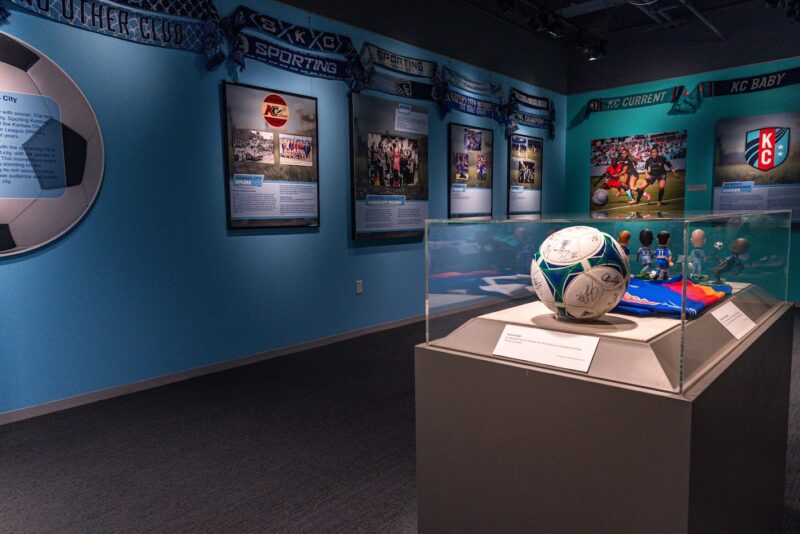
Explore todas estas histórias, e muitas outras, na biblioteca dele em Independence. Além disso, este verão conta com uma exposição especial inspirada no desporto, intitulada «United We Play: Kicking it with the Trumans».
Inspirada no facto de Kansas City ser uma das cidades anfitriãs do Campeonato do Mundo de Futebol da FIFA 2026™, a exposição destaca os laços pessoais da família Truman com o desporto em Kansas City e não só, bem como uma impressionante coleção de recordações das equipas desportivas da cidade, tanto do passado como do presente.
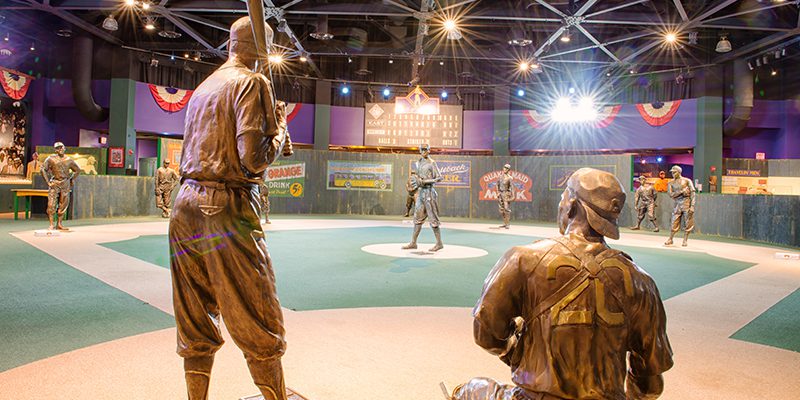
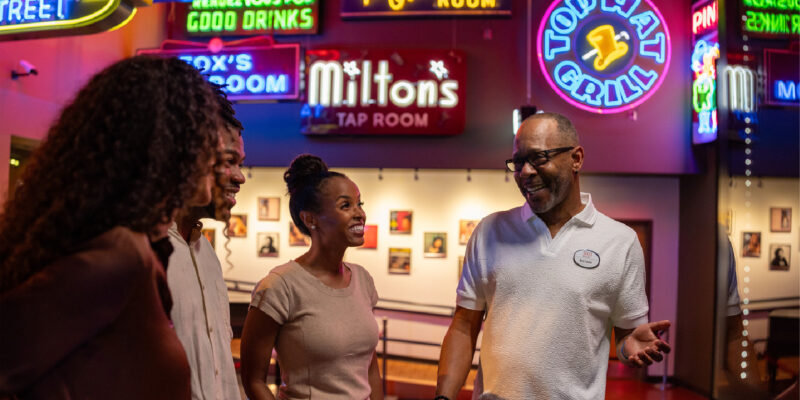
Museu de Basebol das Ligas Negras
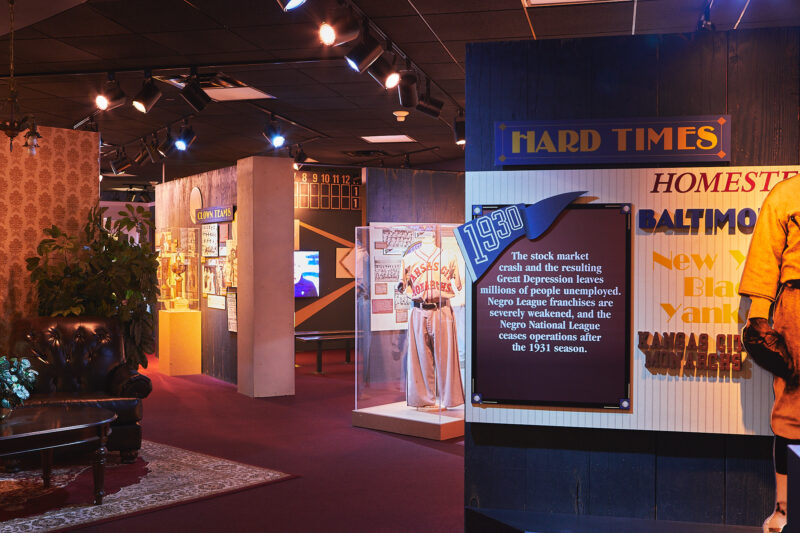
Depois de consultar o Decreto Presidencial n.º 9981, visite o Museu do Basebol das Ligas Negras para conhecer este passo monumental no desporto, que antecedeu a desegregação das Forças Armadas — e que provavelmente influenciou o próprio Truman.
O Museu das Ligas Negras de Basebol (NLBM) dedica-se ao legado do basebol negro e ao seu papel fundamental na promoção dos direitos civis americanos. Em 1920, a Liga Nacional Negra foi fundada no Paseo YMCA de Kansas City - uma estrutura que ainda se mantém no bairro, do outro lado da rua do NLBM.
Nos anos e décadas que se seguiram, o basebol da Liga Negra tornou-se imensamente popular, mas os padrões mais amplos de discriminação continuaram. Os fãs que assistiam entusiasticamente aos jogadores negros em campo muitas vezes negavam-lhes atendimento em restaurantes, hotéis e outros estabelecimentos.
Jackie Robinson quebrou a barreira racial da Major League Baseball em 1947, quando estreou pelo Brooklyn Dodgers, levando eventualmente à integração total e ao fim das Negro Leagues, mas a perseverança de muitos atletas pioneiros deixou um legado que remodelou para sempre os desportos e a sociedade americana.
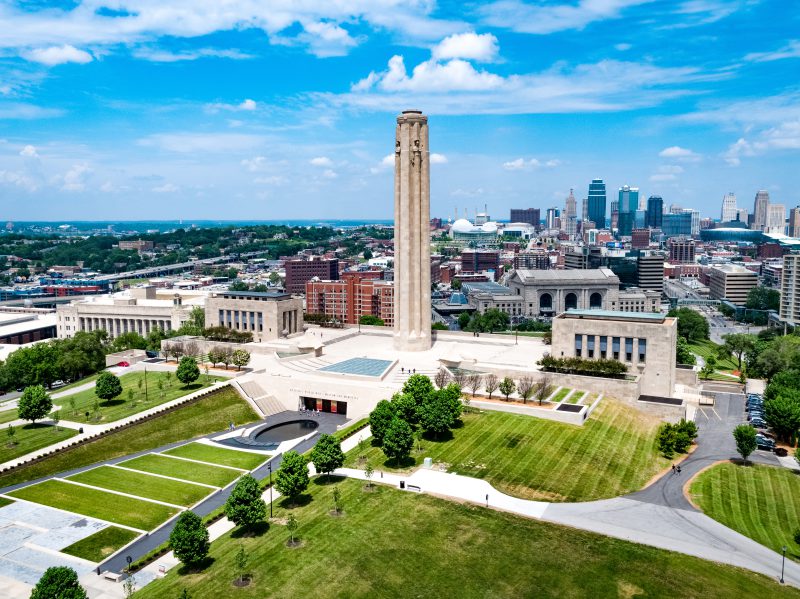
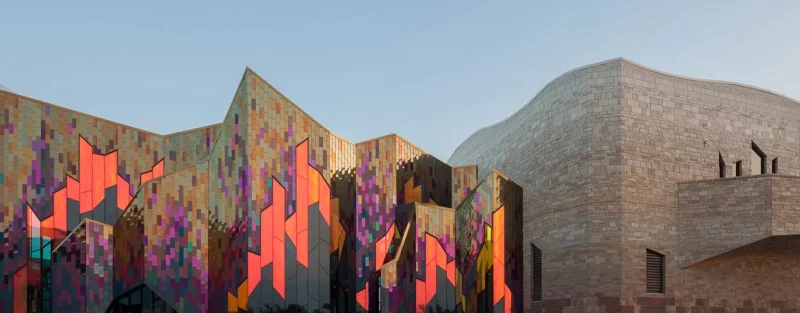
Museu e Memorial Nacional da Primeira Guerra Mundial
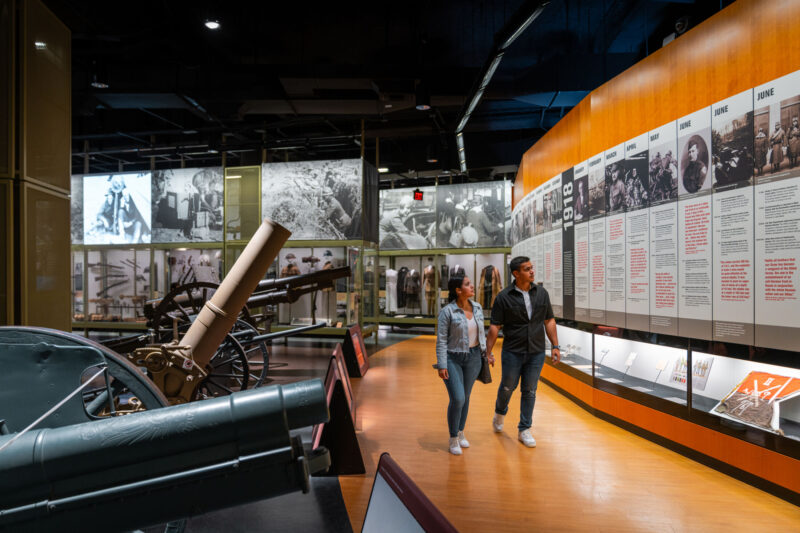
Depois de analisar o discurso dos 14 Pontos do Presidente Woodrow Wilson, visite o Museu e Memorial Nacional da Primeira Guerra Mundial. Saiba mais sobre o conflito global que levou a uma nova proposta de diplomacia pacífica.
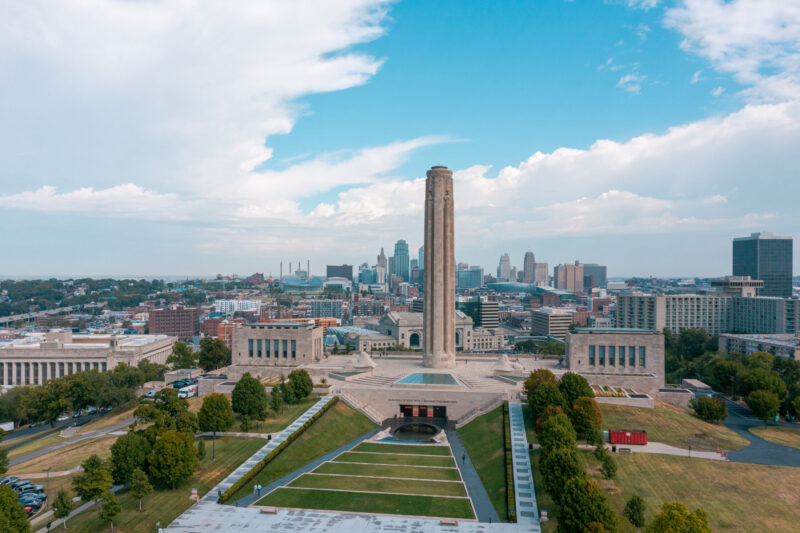
O Museu e Memorial Nacional da Primeira Guerra Mundial é o único museu americano inteiramente dedicado à preservação dos objetos, da história e das experiências pessoais da Grande Guerra.
O museu possui também a mais diversificada coleção de objectos e documentos da Primeira Guerra Mundial do mundo. Os visitantes podem mergulhar nestas histórias com filmes interactivos, iluminação de alta tecnologia e efeitos especiais, armazenamento aberto de artefactos e muito mais.
Parque Histórico Nacional Brown v. Board
Depois de assistir à histórica decisão do caso Brown v. Board of Education, faça uma visita a Topeka e veja o local onde teve início esta batalha jurídica marcante pela igualdade.
A uma hora a oeste do centro de Kansas City, explore os momentos que conduziram a uma das decisões mais significativas alguma vez tomadas pelo sistema judicial dos EUA. O caso Brown vs. Conselho de Educação surgiu no sistema escolar de Topeka, onde a professora que se tornou ativista Lucinda Todd levou 13 famílias a matricularem os seus filhos nas escolas brancas locais.
A sua recusa tornou-se a base de uma ação judicial que chegou ao Supremo Tribunal, onde os juízes decidiram por unanimidade anular a doutrina "separados mas iguais" anteriormente estabelecida por Plessy vs. Ferguson. A decisão pôs fim à segregação legal do sistema escolar público americano e, embora tenha provocado uma intensa resistência em locais de todo o país, continua a ser uma das acções mais importantes da história judicial do país.
Visite o Brown v. Board of Education National Historical Park e entre na Monroe School para uma visita auto-guiada, que inclui um filme introdutório de 30 minutos, uma exposição que descreve a longa luta pela igualdade racial no sistema escolar dos EUA e uma exploração do impacto duradouro da decisão.